

The most trusted name in at-home ketamine therapy
Mindbloom Tablets combine clinical precision, compassionate care, and proven results through flexible, guided treatment built for everyday life.
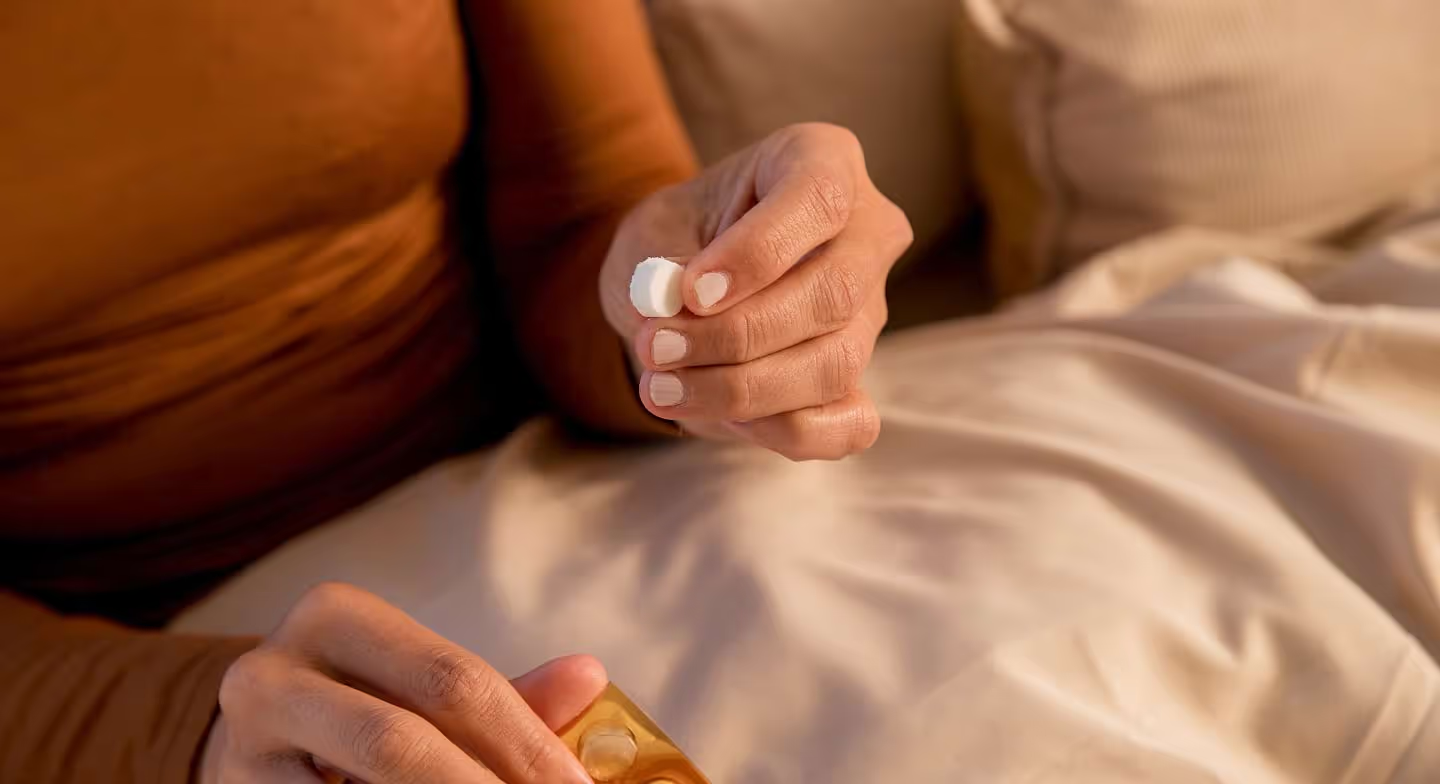
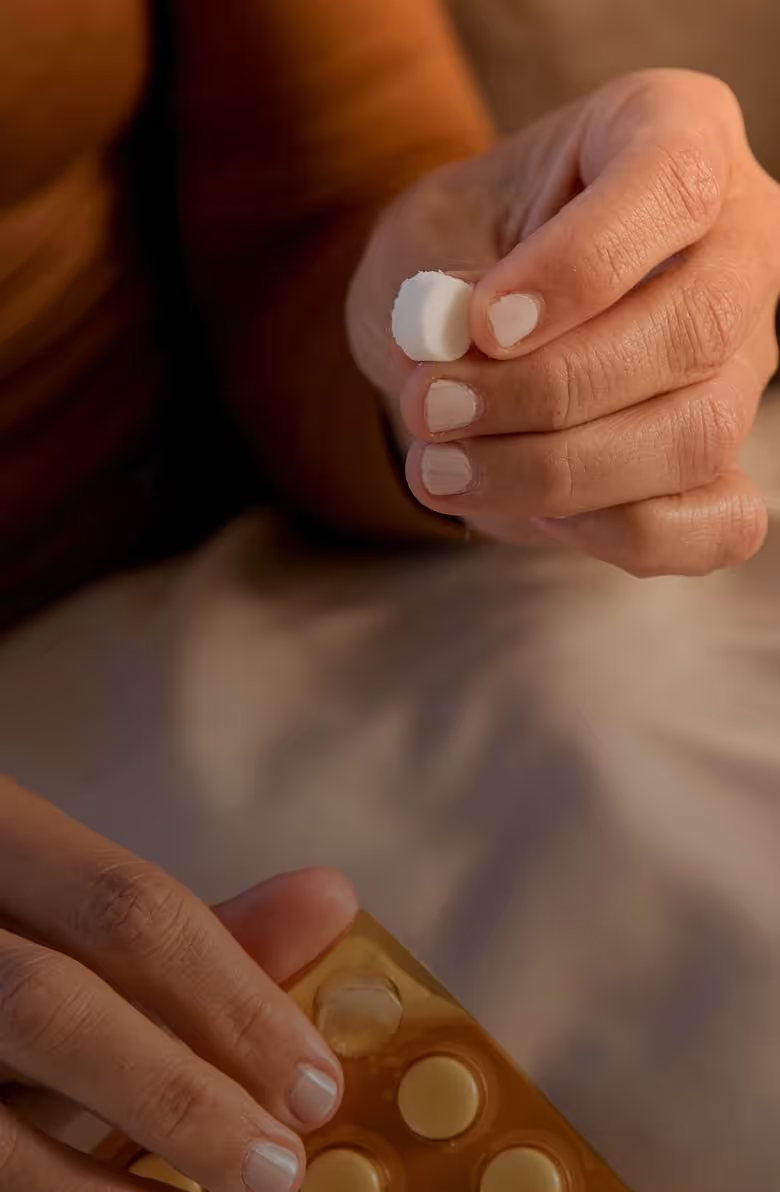
Progress you can feel, healing you can trust.


Outcomes backed by data, not promises
The only at-home ketamine therapy backed by peer-reviewed outcomes. Real data, real clients, real healing. Results you can trust because they’ve been studied, measured, and proven.

Comprehensive care that goes beyond medicine
You’ll receive ongoing integration support, personalized guidance, and structured programs that help your insights turn into lasting change.

Guided treatment from the comfort of your home
Frustration-free ketamine therapy on your schedule, in your space. No traffic, no in-office appointments.




We do our research so you can do your research.
Mindbloom’s best in class outcomes were validated in the two largest-ever peer-reviewed studies on psychedelic medicine.



GET POWERFUL RESULTS, RIGHT AT HOME
Other at-home programs deliver tablets. Mindbloom delivers transformation.
Our approach combines medicine with meaning—pairing personalized dosing, expert oversight, and guided integration to make every experience safe, supported, and effective.

The premium experience you can only get with Mindbloom.
See what sets us apart from the average IV clinic.

Back by the two largest peer-reviewed studies of ketamine therapy
No peer-reviewed outcomes data published
95% report no side effects, peer-reviewed
No peer-reviewed safety data published
Personalized dosing and flexible session schedule
Low-dose daily
1:1 personal coaching and integration support
Curated psychology-based courses
Available in 38 states
Available in 28 states
Intention setting, soundscapes, voice journaling, and more
None
Empowering client community with daily group circles
Not included
Partial out-of-network reimbursement for eligible plans; HSA and FSA accepted
100% self-pay, HSA and FSA accepted
.avif)
Mindbloom changes lives. But don’t take our word for it.
Hear moving and mindful stories of personal transformation.*
*Opinions expressed belong to the individuals depicted. Results may vary and may not be representative of all clients. Individuals marked Paid Partner were compensated to share their experience.
FAQ
How are ketamine tablets different from IV ketamine infusions?
Both can be effective, with some key differences:⁴³'⁴⁸'⁵⁶
Sublingual tablets:
• At-home administration, no needles
• Effects onset in 10-15 minutes, build gradually~30% bioavailability
• 60% more affordable than IV clinics
• Held in the mouth for 7 minutes before being spit out
• More variable absorption between individuals
IV ketamine:
• Requires clinic visit and IV access
• Effects onset in 1-2 minutes, more intense
• 100% bioavailability (direct bloodstream)
• More expensive ($400-800 per session)
• More consistent dosing, requires in-person monitoring
• Clinical research shows both routes produce meaningful improvements—the choice often depends on individual preferences, access, and response.⁵'⁴³'⁵⁶
Here are some additional considerations for ketamine tablets:⁹
Variable absorption: Some people report inconsistent session intensity. This can result from differences in individual bioavailability, technique (holding tablets for the full 7 minutes), oral tissue health, or accidentally swallowing medication.⁸'⁴⁴
Taste: Some find the taste unpleasant, though most adapt over the course of treatment.⁹
Technique requirements: Proper administration requires following instructions carefully—holding tablets in the right place for the full 7 minutes without swallowing.⁹
How do I know whether Tablets or Injectables are right for me?
This decision is made during your first Video Consult, where you discuss your specific needs with a clinician. They'll help you understand which option might work best based on your history and treatment goals.
With clinician approval, you are able to switch between Tablets and Injectables at the beginning of a 6 treatment prescription. When you meet with your clinician for a follow-up consult to get a new shipment of medication, we suggest discussing options to find the best route for you.
Who leads my treatment?
Your care team includes a psychiatric clinician, a guide, and Mindbloom's live support team.
Your clinician will build your personalized treatment plan, and actively monitor your progress to ensure you're getting medicine that's right for you.
Your guide will offer live 1:1 coaching and messaging to help you prepare for treatment and integrate your experiences to enable lasting transformation. Guides also host Group Integration Circles, where you can find connection and healing with fellow Mindbloom clients.
Our support team is standing by to help via SMS, email, and live chat.
How do ketamine tablets work?
Ketamine tablets work through a sublingual delivery system that allows the medication to absorb directly into your bloodstream through the mucous membranes in your mouth. This method bypasses the digestive system, achieving approximately 30% bioavailability—significantly higher than swallowed tablets—while eliminating the need for injections. The rapid dissolve format typically takes 7 minutes to fully administer.
Unlike traditional oral medications that pass through the digestive system, rapid dissolve sublingual ketamine tablets dissolve between the cheeks and gums, allowing the medication to absorb directly into the bloodstream through the mucous membranes in your mouth. This method achieves approximately 30% bioavailability—higher than higher than swallowed tablets (17%-24%) while avoiding the need for injections.⁷'⁸
Sublingual ketamine tablets follow a specific administration protocol:⁹
• Place tablets between cheeks and gums (not under the tongue)
• Hold for 7 minutes without swallowing
• Allow medication to dissolve as it absorbs through oral tissue
• After 7 minutes, spit out remaining medication (do not swallow)
This protocol is essential for proper absorption. Effects typically begin within 10-15 minutes, reaching peak intensity within 30-45 minutes. The entire therapeutic experience typically lasts 45-75 minutes.¹⁰
What does clinical evidence show about ketamine tablet efficiency?
The effectiveness of sublingual ketamine tablets has been studied in both controlled trials and real-world clinical settings. In Mindbloom's peer-reviewed research published in the Journal of Affective Disorders, which analyzed outcomes from 1,247 clients with moderate to severe depression and anxiety:⁵
• 89% reported improvement after completing four sessions
• 63% achieved a treatment response (≥50% reduction in symptoms)
• 30% reached remission (scoring below diagnostic threshold on PHQ-9)
• 62% of participants with suicidal ideation no longer reported suicidal thoughts after treatment
A larger follow-up study of 11,441 Mindbloom clients confirmed sustained benefits:⁶
• 62% achieved a treatment response in depression or anxiety
• 84% of participants who initially improved either maintained improvements or recovered with additional treatment
• 28% achieved full remission after four sessions
Note: These results are from open-label, observational studies, which may overestimate treatment effects compared to controlled trials. Individual results vary.
How long does it take to see results?
Some clients see improvements right after their first session. For others, it can take a few more sessions to feel results, but 89% of clients see improvement after 4 sessions. In addition to immediate symptom relief, ketamine can help create new neural connections, facilitate emotional healing, and provide powerful insights for long-lasting, positive lifestyle changes.
Clinical research shows that benefits emerge along different timelines:⁵'²⁵'²⁹
During the session (0-2 hours):
Some people report feeling emotionally lighter or experiencing shifts in perspective during or immediately following their session. The acute therapeutic experience typically lasts 45-75 minutes.
First week after treatment:
Some individuals notice improvements in mood, reduced anxiety, and decreased rumination within 24-72 hours. The potential for rapid-onset effects is one of the key differences between ketamine and traditional antidepressants, though not all patients experience this timeline.
After multiple sessions (1-4 weeks):
With repeated sessions, clients often experience cumulative benefits. Integration practices between sessions can help solidify insights and behavioral changes. Research shows that the majority of improvement occurs within the first four sessions.⁵
While Mindbloom’s clinical research shows that approximately 89% of participants who completed treatment reported improvement in symptoms, ketamine doesn't work for everyone.⁵'⁶
Approximately 11% reported no clinically meaningful improvement, and additional individuals discontinued treatment before completing the initial program.
If you are not progressing in the way you hope to, clinicians can discuss:
• Adjusting the dosing protocol
• Trying a different administration route
• Exploring other evidence-based treatments
• Referral to additional mental health resources
What does ketamine feel like?
The felt experience of ketamine therapy is usually gentle, introspective, and positive. Our clients often report sensations of weightlessness and a dreamlike state. Each session typically lasts 45 minutes-1 hour, and you can resume your daily activities shortly thereafter.
Your sessions take place at-home, and our clinical study demonstrated that a deeper level of comfort actually leads to improved results. Check out the research here.
The acute effects of a single session typically last 45-75 minutes.¹⁰'²⁹ However, the therapeutic antidepressant effects often persist for days to weeks.²³'⁵⁰
Duration of benefits varies by individual:²³'⁵⁰'⁵¹
• Some people experience sustained improvements for 1-2 weeks after a single session
• With repeated sessions, some maintain benefits for weeks to months
• Some require ongoing maintenance sessions to sustain improvements
• Integration practices between sessions may help extend therapeutic benefits
Here are a few client quotes we love:
“Before Mindbloom, feeling joy required so much work. After my very first session, I was planted in the present moment and immediately felt lighter. It stuck with me and just feels natural now.”
–Katie S.
“I had immediate relief from my anxiety and depression after my very first Mindbloom session. I’m so much more resilient to stress and am able to sit with and process my feelings now. I’m still feeling the benefits after my last session two months ago.”
—Adrienne E.
“After the first session, I started to feel a change in my mood and mindset. Each session thereafter feels like it continues to improve. The cloud of depression has dissipated and my anxiety has been extremely controllable - I feel like when I do get anxious, it comes for a moment and I am able to rationally process and let go.”
—Kaleb E.
Does Mindbloom accept insurance and HSA/FSA?
Currently, most insurance plans don't cover ketamine therapy for depression or anxiety, as it represents off-label use.⁵⁵ However:
• Partial out-of-network insurance reimbursement may be available depending on your plan. This is done by submitting a "superbill," or an itemized receipt provided after the initial virtual consultation.
• At-home programs are typically 60% less expensive than in-clinic IV ketamine (which may cost $400-800 per session)
• Treatment may be HSA/FSA eligible (check with your plan)
• Some people find the cost worthwhile given the potential for rapid relief when other treatments haven't worked
How do different ketamine tablet options compare?
What’s the difference between rapid-dissolve sublingual and extended-release oral tablets?
Not all ketamine tablets work the same way. Understanding the difference helps clarify what you're getting:
Note: This table compares different ketamine administration methods. Mindbloom uses rapid-dissolve sublingual tablets which may offer more control over the therapeutic experience and allows for precise dose adjustments. Individual experiences may vary within each method.
How do all ketamine delivery methods compare?
Can I continue my current antidepressant while using ketamine tablets?
In many cases, yes. Ketamine works through a different mechanism than SSRIs or SNRIs, so they can often be combined safely.⁴⁸ Combination treatment may even enhance outcomes.⁴⁹ However, certain medications may be contraindicated, so it's essential to disclose all current medications during your assessment.
Citations
- Duman RS, Aghajanian GK. Synaptic dysfunction in depression: potential therapeutic targets. Science. 2012;338(6103):68-72. https://doi.org/10.1126/science.1222939
- Bandelow B, Michaelis S, Wedekind D. Treatment of anxiety disorders. Dialogues Clin Neurosci. 2017;19(2):93-107. https://doi.org/10.31887/DCNS.2017.19.2/bbandelow
- Taylor JH, Landeros-Weisenberger A, Coughlin C, et al. Ketamine for Social Anxiety Disorder: A Randomized, Placebo-Controlled Crossover Trial. Neuropsychopharmacology. 2018;43(2):325-333. https://doi.org/10.1038/npp.2017.194
- Abdallah CG, Sanacora G, Duman RS, Krystal JH. Ketamine and rapid-acting antidepressants: a window into a new neurobiology for mood disorder therapeutics. Annu Rev Med. 2015;66:509-523. https://doi.org/10.1146/annurev-med-053013-062946
- Hull TD, Malgaroli M, Gazzaley A, et al. At-home, sublingual ketamine telehealth is a safe and effective treatment for moderate to severe anxiety and depression: Findings from a large, prospective, open-label effectiveness trial. J Affect Disord. 2022;314:59-67. https://doi.org/10.1016/j.jad.2022.07.004
- Mathai DS, Hull TD, Malgaroli M, et al. At-home, telehealth-supported ketamine treatment for depression: Findings from longitudinal, machine learning and symptom network analysis of real-world data. J Affect Disord. 2024;361:198-208. https://doi.org/10.1016/j.jad.2024.05.131
- Dore J, Turnipseed B, Dwyer S, et al. Ketamine Assisted Psychotherapy (KAP): Patient Demographics, Clinical Data and Outcomes in Three Large Practices Administering Ketamine with Psychotherapy. J Psychoactive Drugs. 2019;51(2):189-198. https://doi.org/10.1080/02791072.2019.1587556
- Li L, Vlisides PE. Ketamine: 50 Years of Modulating the Mind. Front Hum Neurosci. 2016;10:612. https://doi.org/10.3389/fnhum.2016.00612
- Short B, Fong J, Galvez V, Shelker W, Loo CK. Side-effects associated with ketamine use in depression: a systematic review. Lancet Psychiatry. 2018;5(1):65-78. https://doi.org/10.1016/S2215-0366(17)30272-9
- Lader M. Benzodiazepine harm: how can it be reduced? Br J Clin Pharmacol. 2014;77(2):295-301. https://doi.org/10.1111/j.1365-2125.2012.04418.x
- Cascade E, Kalali AH, Kennedy SH. Real-World Data on SSRI Antidepressant Side Effects. Psychiatry (Edgmont). 2009;6(2):16-18. https://www.ncbi.nlm.nih.gov/pmc/articles/PMC2719451/
- Bystritsky A. Treatment-resistant anxiety disorders. Mol Psychiatry. 2006;11(9):805-814. https://doi.org/10.1038/sj.mp.4001852
- Feder A, Rutter SB, Schiller D, Charney DS. The emergence of ketamine as a novel treatment for posttraumatic stress disorder. Adv Pharmacol. 2020;89:261-286. https://doi.org/10.1016/bs.apha.2020.05.004
Disclaimers
IMPORTANT SAFETY INFORMATION
Ketamine is not FDA-approved for PTSD, depression, or anxiety. Common side effects include dissociation, increased blood pressure, nausea, dizziness, and cognitive impairment. Ketamine has abuse potential and is not appropriate for patients with uncontrolled hypertension, psychotic disorders, or substance use disorders. Do not drive or operate machinery until the day after treatment. Individual results may vary.
Full safety information: www.mindbloom.com/safety-information
OFF-LABEL USE DISCLOSURE
Ketamine is FDA-approved only as an anesthetic. Use for mental health conditions represents off-label prescribing by licensed clinicians based on clinical judgment. Schedule III Controlled Substance - DEA regulations apply.