Last Updated: May 19, 2026
Ketamine Therapy: Are Sessions Medically Supervised?
Ketamine therapy is medically supervised — and understanding what that supervision actually looks like helps you evaluate whether a program meets clinical standards. This article covers how ketamine is legally prescribed, who provides oversight, what happens across each phase of treatment, and how safety is built into both clinic-based and at-home programs.

Key takeaways
- Medical supervision in ketamine therapy is a four-phase framework — screening, preparation, in-session monitoring, and post-session follow-up — not a single event.
- Ketamine is a Schedule III controlled substance that requires a prescription from a licensed provider and cannot be obtained over the counter.
- Every at-home Mindbloom session requires an in-person peer treatment monitor as part of the care safety protocol.
- Mindbloom's published outcomes show 89% symptom improvement for depression and anxiety, demonstrating that protocol-driven at-home supervision can produce results comparable to in-clinic studies.
Is Ketamine Therapy Legal in the United States?
Licensed medical professionals can legally prescribe ketamine off-label for mental health conditions such as depression, anxiety, and PTSD. Ketamine has been FDA-approved as an anesthetic since 1970 and has been on the World Health Organization List of Essential Medicines since 1985.1
Off-label prescribing is a widespread, legally accepted prescribing practice across psychiatry.2 Physicians use their professional judgment and the existing evidence base to prescribe medications for unapproved indications when clinically appropriate. Approximately 21% of all prescriptions in the United States are written off-label.3
Off-label ketamine differs from Spravato, an FDA-approved esketamine nasal spray that requires in-clinic administration under a Risk Evaluation and Mitigation Strategy (REMS) program. State telehealth laws govern how providers can prescribe and supervise off-label ketamine remotely, and these regulations vary by state.
Legality is not in question when treatment is prescribed by a licensed provider following established prescribing guidelines. The key variable is whether the provider operates within a compliant, protocol-driven framework.
Is Ketamine a Controlled Substance?
Abuse and dependence risks in supervised, sub-anesthetic therapeutic protocols are low.4 Ketamine is classified as a Schedule III controlled substance by the Drug Enforcement Administration, meaning it has accepted medical use but also recognized potential for misuse. This classification requires a prescription from a DEA-registered physician and subjects the medication to strict dispensing and storage regulations.
Compounding pharmacies that prepare specific ketamine formulations are highly regulated entities within the healthcare system.
Key regulatory facts include:
- Schedule III classification: The medication has accepted medical use with a moderate to low potential for physical or psychological dependence.
- Prescription required: Treatment must be prescribed by a licensed, DEA-registered provider after a medical evaluation.
- Not available over the counter: Patients cannot legally obtain the medication without a prescription and medical clearance.
Who Can Prescribe Ketamine for Mental Health Treatment?
Licensed medical professionals with prescriptive authority can prescribe ketamine for mental health conditions. Eligible prescribers include physicians (MDs and DOs), psychiatrists, nurse practitioners, and physician assistants, depending on specific state scope-of-practice laws.
There is a distinct difference between prescribing the medication and administering it. Prescribing is the medical decision made by a licensed provider who evaluates the patient, reviews their medical history, confirms eligibility, and orders the medication.
Administering refers to how the medication is actually taken. In a clinic, a nurse or medical assistant may administer an intravenous infusion. In an at-home setting, the client self-administers under the protocol-driven framework described below.
The quality of supervision depends on the rigor of the intake evaluation and ongoing oversight, not on the specific credential of the prescriber. What matters is that the provider has relevant training, follows evidence-based protocols, and maintains ongoing contact with the patient.
The roles break down as follows:
- Prescribing: A licensed specialist evaluates the patient, confirms eligibility, determines the treatment plan, and writes the prescription.
- Administering: In-clinic staff deliver infusions, while at-home clients self-administer per protocol with a peer treatment monitor present.
- Ongoing oversight: The prescribing provider monitors progress, adjusts dosing, and manages the treatment plan across all sessions.
Who Monitors Ketamine Sessions and What Medical Supervision Means
Rather than a single checkpoint, medical supervision spans the full arc of treatment: screening, preparation, the dosing session, and post-session follow-up. It does not require a physician to be physically present in the room during every session.
In a clinic setting, a nurse or healthcare professional typically monitors vitals and observes the patient in person during an infusion. In an at-home setting, supervision is built into the protocol itself.
The provider prescribes and oversees the treatment plan, the client follows a defined session protocol, and a peer treatment monitor is required to be present throughout the session. Between sessions, the provider reviews progress and adjusts the care plan.
A well-designed protocol with screening, monitoring, and follow-up provides meaningful professional oversight regardless of whether a physician is physically in the room.
The components of medical supervision include:
- Prescribing clinician: Owns the treatment plan end-to-end, handling eligibility evaluation, dosing decisions, ongoing adjustments, and medical accountability.
- In-session monitor: In-clinic settings rely on medical staff for real-time vitals monitoring, while most at-home settings require a peer treatment monitor to be present with defined escalation protocols.
- Care support team: Backs the prescribing provider for between-session questions, escalation, and care continuity.
What Happens During a Medically Supervised Ketamine Session
A professionally supervised ketamine session follows a four-phase framework consisting of medical screening, pre-session preparation, the dosing session, and post-session integration. The four-phase structure applies whether the session takes place in a clinic or at home.
Each phase serves a distinct safety purpose to protect the client and maximize therapeutic benefits.
- Health and psychiatric screening: A licensed provider conducts a comprehensive evaluation covering psychiatric history, current medications, cardiovascular health, and conditions such as uncontrolled hypertension or active psychosis that may make treatment inappropriate or require additional caution.
- Pre-session preparation and informed consent: The provider reviews what to expect, potential effects, and how to navigate them. The client prepares their environment and uses custom soundscapes to support the therapeutic experience.
- The dosing session: The client receives the medication via sublingual tablet, subcutaneous injection, infusion, or nasal spray. Either a peer treatment monitor or on-site medical staff remains with the client for the 60 to 90-minute session.
- Post-session integration and follow-up: The client transitions back to baseline during the post-session period. Integration practices like journaling help consolidate insights, and the provider reviews the session at the next consult.
Skipping any phase weakens the safety and effectiveness of the treatment.
Ketamine Sessions at a Clinic vs at Home
Ketamine therapy is delivered in two primary settings, each utilizing a distinct supervision model to ensure patient safety. Neither setting is inherently superior, as both can provide safe and effective care when protocols are followed.
In-clinic sessions typically involve intravenous infusions administered by a healthcare professional with real-time vitals monitoring. Spravato requires in-clinic administration under its REMS program, including a mandatory two-hour observation period. In-clinic sessions suit people who prefer direct medical observation or who have health profiles that benefit from in-person monitoring.
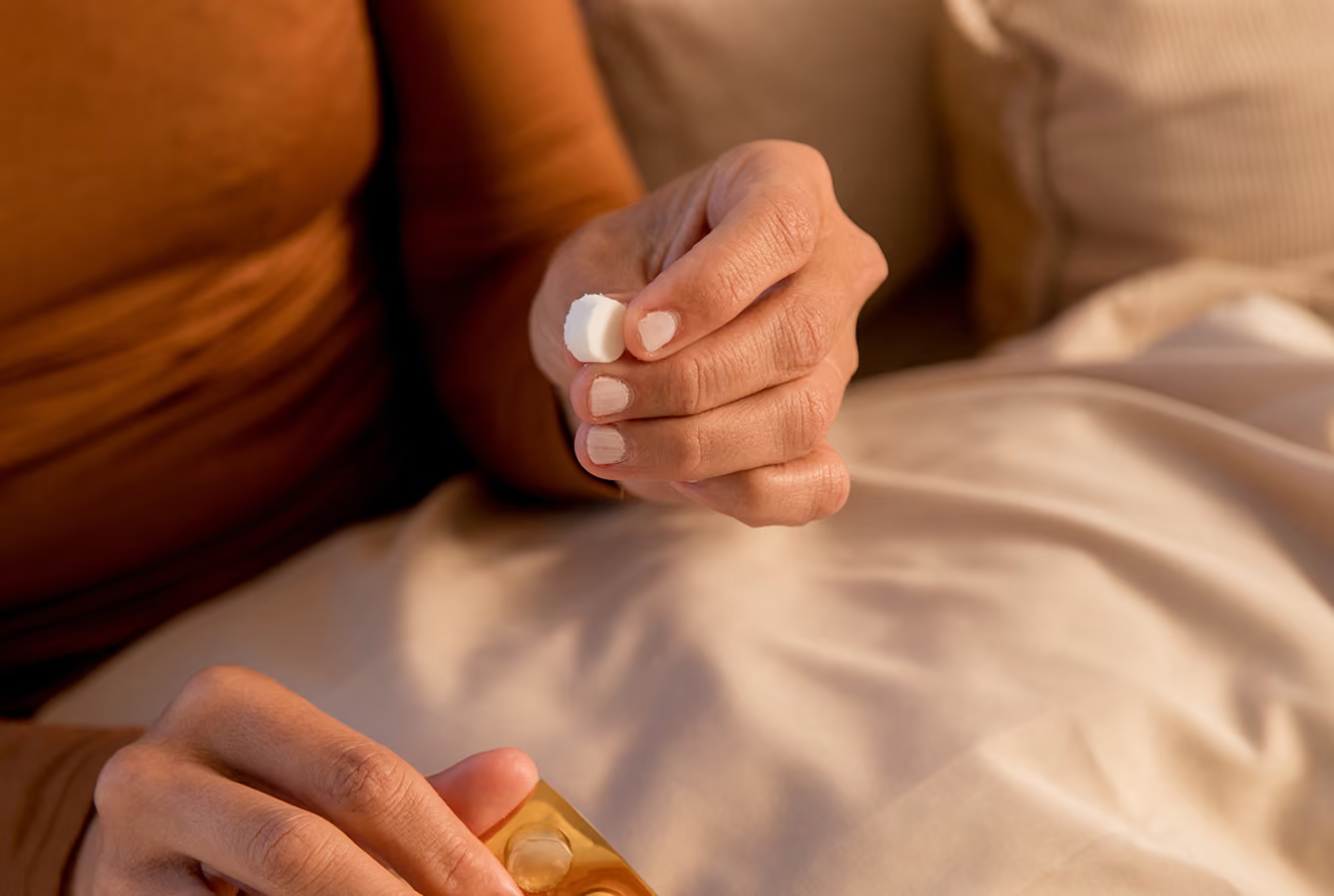
At-home sessions involve self-administering sublingual tablets or subcutaneous injections following a provider-prescribed protocol. The protocol requires a peer treatment monitor in the room throughout, while the prescribing provider oversees the treatment plan remotely. At-home sessions suit people who value comfort, privacy, and convenience, and who meet health eligibility criteria for remote care.
Peer-reviewed research, including Mindbloom's published at-home outcomes study, has demonstrated symptom improvement rates comparable to those reported in published intravenous ketamine studies.5,6 The right setting depends on your health profile, personal preference, and access.
| Setting | Administration Method | Supervision Model | Monitoring During Session | FDA Approval Status | Relative Cost |
|---|---|---|---|---|---|
| In-Clinic (IV) | Intravenous infusion | In-person medical staff | Real-time vitals monitoring | Off-label | Highest |
| In-Clinic (Spravato) | Nasal spray | In-person medical staff | Two-hour observation period | FDA-approved (REMS) | Varies by insurance |
| At-Home (Sublingual) | Sublingual tablets | Remote provider oversight | Peer treatment monitor | Off-label | Lower |
| At-Home (Subcutaneous) | Subcutaneous injection | Remote provider oversight | Peer treatment monitor | Off-label | Lower |
Are Ketamine Clinics and At-Home Programs Safe?
What makes ketamine therapy safe is the care protocol, not the treatment setting alone.8 The key safety question is how a program manages specific risks such as transient blood pressure changes, dissociation, sedation, dosing errors, and delayed recognition of adverse reactions across screening, the session itself, and follow-up.
A safe ketamine program relies on several core elements:
- Patient selection and screening: The comprehensive evaluation described in the session framework above, designed to identify contraindications before dosing begins.
- Provider-determined dosing: Sub-anesthetic, therapeutic doses personalized based on individual assessment.
- In-session monitoring: The peer treatment monitor (described above) or on-site staff member is present throughout.
- Escalation protocols: Defined steps for managing unexpected reactions, including when to contact the care team or seek emergency care.
- Post-session follow-up: Provider reviews of each session to assess response and adjust the plan.
The American Society of Anesthesiologists states that ketamine for mental health should be provided by trained professionals. Published peer-reviewed evidence reinforces the safety of protocol-driven at-home programs when operated by trained professionals. In Mindbloom's published safety data, side effects occur in approximately 4 to 5% of sessions, and serious adverse events occur in fewer than 0.1%.5,7
The most important question to ask any provider is about their screening criteria and monitoring standards. Safety is built into the framework of care, not the walls of a building.
What Are the Benefits of Ketamine Therapy for Depression and Anxiety?
Ketamine works through a different mechanism than traditional antidepressants, temporarily modulating glutamate signaling and increasing neuroplasticity.9
Because it works through NMDA pathways, ketamine helps the brain form new neural connections and shift entrenched thought patterns. In Mindbloom's published data, 89% of clients reported symptom improvement, with many noticing changes within hours or days of their first session. More durable and cumulative benefits typically develop over a defined series of sessions, and integration practices help sustain progress over time.
Mindbloom's published outcomes can be compared directionally with selected SSRI, talk therapy, and PTSD treatment studies, although differences in study design, patient populations, and outcome measures mean those cross-study comparisons should be interpreted cautiously.7 Building on decades of scientific research, Mindbloom has published two of the largest peer-reviewed, real-world outcomes studies of at-home ketamine therapy to date.
- Depression: 89% of clients reported symptom improvement, with a 56.4% response rate.7 Mindbloom's reported depression response rates exceed those reported in selected SSRI antidepressant studies10 and meta-analyses of talk therapy.11
- Anxiety: 89% reported symptom improvement, with a 56.1% response rate.7
- PTSD: 92.2% reported symptom improvement, with a 79.7% response rate and 60.7% remission rate.12 Mindbloom's reported response rate exceeds response rates reported in select randomized trials of prolonged exposure therapy and sertraline for PTSD.12
These outcomes demonstrate what ketamine therapy can achieve when delivered within a defined care protocol. Results are based on validated psychometric instruments across large real-world samples, though individual results may vary.
Does Ketamine Therapy Have Any Side Effects?
Ketamine therapy can produce acute effects such as dissociation, nausea, dizziness, temporary blood pressure increases, and post-session fatigue, and each is managed differently within a supervised care protocol. Side effects and serious adverse events are distinct categories with very different prevalence rates.
When side effects occur, they can include:
- Dissociation: A shift in perception that most people find therapeutically meaningful within a supervised setting. Preparation materials and the peer treatment monitor help navigate the experience if it feels unfamiliar.
- Nausea: Some people experience nausea as ketamine can affect vestibular and autonomic function; symptoms are monitored during the session and usually improve as the acute drug effects wear off.
- Dizziness or lightheadedness: Dizziness can occur as the medication takes effect. Remaining in a comfortable, reclined position helps.
- Temporary increase in blood pressure: Some people experience a temporary increase in blood pressure during the session. The reason is pharmacologic: ketamine has sympathomimetic properties that temporarily stimulate the cardiovascular system. Cardiovascular screening during intake identifies individuals for whom blood pressure changes may pose a concern.
- Fatigue or cognitive fog: Some people feel tired or mentally hazy after a session. Avoid driving or operating machinery until after a full night of sleep.
In Mindbloom's published data, side effects occur in approximately 4 to 5% of sessions.5,7 Serious adverse events, which are unexpected medical events requiring provider intervention, occur in fewer than 0.1% of sessions. The intake screening process and peer treatment monitor requirement are specifically designed to identify risk factors and manage any effects that arise.
How Mindbloom Builds Medical Supervision into Every Session
Mindbloom is one of the largest providers of guided at-home ketamine therapy in the United States. The company utilizes a rigorously managed protocol designed to deliver medical supervision across every phase of treatment.
Mindbloom offers programs of 6, 12, or 18 sessions. After you select a program, a licensed provider conducts a comprehensive health evaluation to determine whether treatment is appropriate and to personalize your care plan.
The care model includes:
- Provider consults: Licensed specialists conduct intake evaluations, confirm eligibility, personalize care plans, and monitor progress.
- Peer treatment monitor: Required to be present during every session as part of the care safety protocol.
- Guide coaching sessions: One-on-one coaching for preparation and integration helps clients apply insights to daily life.
- Group Integration Circles: Unlimited access to peer-led integration sessions provides ongoing support.
- Personalized care: Mindbloom is the only at-home ketamine provider offering subcutaneous administration in addition to sublingual tablets, and every program includes a Bloombox experiential toolkit.
- Published outcomes: Over 800,000 supervised sessions facilitated to date, with peer-reviewed studies reporting 89% symptom improvement for depression and anxiety and serious adverse events in fewer than 0.1% of sessions.
Mindbloom's model demonstrates that professional supervision is not limited to in-clinic settings. When screening, monitoring, integration, and provider oversight are built into the protocol, at-home ketamine therapy can be both safe and effective. Book my breakthrough.
Conclusion
What defines legitimate ketamine therapy is not where it happens but how rigorously the care protocol governs every phase of the experience. A comprehensive framework includes medical screening, provider prescribing, in-session monitoring, integration support, and ongoing follow-up. You should evaluate any ketamine provider based on their care framework, published outcomes, and ongoing oversight model.
Important Safety Information
Ketamine is not FDA-approved for PTSD, depression, or anxiety. Common side effects include dissociation, increased blood pressure, nausea, dizziness, and cognitive impairment. Ketamine has abuse potential and is not appropriate for patients with uncontrolled hypertension, psychotic disorders, or substance use disorders. Do not drive or operate machinery until the day after treatment. Individual results may vary. Full safety information: www.mindbloom.com/safety-information
Off-Label Use Disclosure
Ketamine is FDA-approved only as an anesthetic. Use for mental health conditions represents off-label prescribing by licensed clinicians based on clinical judgment. Schedule III Controlled Substance - DEA regulations apply.
Frequently asked questions
Does Insurance Cover Ketamine Therapy?
Most insurance plans do not cover off-label ketamine therapy, though some may reimburse for associated provider consultations. Spravato may be covered under certain plans due to its FDA approval, but coverage varies by insurer and plan. Mindbloom's at-home ketamine therapy starts at $165 per session for an 18-session program, billed as $330 per month for 9 months. Returning clients pay as little as $129 per session with an 18-session program.
Is At-Home Ketamine Therapy Legal?
Yes, at-home ketamine therapy is legal when prescribed by a licensed provider following state and federal regulations, including applicable telehealth laws. Legality depends on the provider operating within a compliant care framework, not on the treatment setting itself.
Do Ketamine Sessions Require Real-Time Monitoring?
Monitoring requirements vary by setting and modality. In-clinic intravenous infusions and Spravato sessions include real-time vitals monitoring by medical staff, while at-home sessions rely on a peer treatment monitor who stays with the client throughout.
What Happens if Side Effects Occur During an At-Home Session?
Because a peer treatment monitor accompanies every at-home session, immediate in-person support is available, and the care team is available for escalation. Defined protocols guide when to contact the care team or seek emergency care if needed.
Can I Get Ketamine Over the Counter?
Ketamine requires a prescription from a licensed provider after a medical evaluation and is not available over the counter.
How Long Does the Post-Session Period Last?
The post-session period is a natural transition back to baseline that typically lasts a few hours. Most people prefer to rest afterward, and you must avoid driving or operating machinery until after a full night of sleep.
Do I Need to Fail Other Treatments First?
Ketamine therapy is an evidence-based option for adults experiencing depression or anxiety, and prior treatment failure is not a universal prerequisite. A licensed provider will evaluate your health history to determine if it is an appropriate option for you.

Mindbloom Treatment
See what might be possible with clinician-guided, at-home ketamine therapy. New client programs start at $165 per session.
Authors