Last Updated: July 28, 2026
Ketamine Therapy in New York
Mindbloom offers guided at-home ketamine therapy throughout New York, serving residents in New York City, Brooklyn, Buffalo, Rochester, Albany, and statewide via telehealth. This page covers the ketamine therapy options available to New York residents, how Mindbloom's supervised at-home program works, published outcomes data, safety protocols, and cost information to help you make an informed decision.

Key takeaways
- Subcutaneous option: Mindbloom is the only at-home ketamine provider offering subcutaneous administration, which 81% of clients who tried both formats report is easier and preferable to sublingual tablets.
- PTSD outcomes: In a real-world analysis of Mindbloom's PTSD program, 92.2% of clients reported symptom improvement, with a 60.7% remission rate.4
- Medical outcomes: In a peer-reviewed study of 11,441 Mindbloom clients receiving guided at-home ketamine therapy, 89% reported symptom improvement, with serious adverse events occurring in fewer than 0.1% of sessions.1
- Cost context: At-home ketamine therapy with Mindbloom is approximately 60% more affordable per session than in-office IV ketamine infusions, and payments may be made using HSA or FSA funds.
What Is Ketamine Therapy?
Ketamine is a well-established medication that has been an FDA-approved anesthetic since 1970. The medication has also been included on the WHO Model List of Essential Medicines since 1985 because of its clinical utility, efficacy, and safety in healthcare settings.2 Using ketamine for mental health conditions represents off-label prescribing by licensed providers. Off-label prescribing is a widespread, legally accepted medical practice used across many areas of healthcare.12
Ketamine Therapy Options in New York and How They Compare
New York residents have several distinct modalities available for ketamine therapy. Each option offers different settings, administration routes, monitoring protocols, and cost profiles. Choosing the right modality depends on your medical needs, comfort level, logistics, and budget.
| Modality | Setting | Administration | Monitoring | Approximate Cost Range | NY Availability |
|---|---|---|---|---|---|
| IV Ketamine | Medical center | Intravenous drip | In-person medical staff | $400 to $800+ per session | High in major metros |
| IM Ketamine | Medical center | Intramuscular injection | In-person support staff | $400 to $800+ per session | Moderate |
| Spravato | Certified office | Nasal spray | 2-hour in-office observation | Varies by insurance copay | High |
| Mindbloom | At home | Sublingual or subcutaneous | Telehealth with peer monitor | $165 to $215 per session | Statewide |
IV Ketamine Infusions in Clinics
Intravenous ketamine therapy involves delivering the medication via an IV drip in a medical office or infusion center. Sessions typically take place over 40 to 60 minutes. During the infusion, on-site staff monitor your vital signs and overall response.
Intravenous delivery suits individuals who prefer in-person medical oversight or those whose providers recommend IV administration for specific reasons. IV ketamine provides the highest bioavailability per session. Sessions require travel to a facility, scheduling during business hours, and typically cost more per session than at-home alternatives.
IM Ketamine in Clinics
Intramuscular ketamine is administered via a direct injection into the muscle at a medical center. The method has a somewhat faster onset than an IV drip but requires a similar in-office monitoring period. Attending staff remain on-site to observe your response to the medication.
For those who prefer a shorter administration window than an IV drip but still want in-person oversight, intramuscular delivery may be a better match. IM ketamine shares the same active compound as IV ketamine but differs in its absorption rate and session logistics. The option is generally less widely available than IV infusions in New York.
Spravato Esketamine Nasal Spray in Clinics
Spravato (esketamine) is an FDA-approved ketamine-derived nasal spray specifically indicated for treatment-resistant depression. The medication is administered exclusively under the Spravato REMS program in certified healthcare settings. Patients must self-administer the spray in the office and remain on-site for a mandatory two-hour observation period.
Patients with a treatment-resistant depression diagnosis whose insurance plans may cover the medication are the primary candidates. Spravato uses esketamine, which is the S-enantiomer of the ketamine molecule, while other modalities use racemic ketamine.
At-Home Ketamine Therapy with Mindbloom
At-home ketamine therapy involves sublingual or subcutaneous ketamine prescribed by a licensed provider and self-administered at home. The process takes place as part of a defined treatment framework. Mindbloom is the largest provider of guided at-home ketamine therapy in the United States and the only at-home provider offering subcutaneous administration.
If you prefer the comfort and familiarity of your own environment, this modality may be a strong fit. Those who want a comprehensive program with coaching and integration, or a more affordable alternative to in-office infusions, will also find this approach well-suited to their needs. Mindbloom's treatment protocol has been evaluated in two peer-reviewed studies published in the Journal of Affective Disorders, with 89% of 11,441 clients reporting symptom improvement and serious adverse events occurring in fewer than 0.1% of sessions.1,3
Best Ketamine Therapy Near Me in New York and What Near Me Means
For in-office ketamine options, "near me" means geographic proximity to a specific facility in Manhattan, Brooklyn, or another borough. For at-home ketamine therapy, it simply means a licensed provider is available in your state.
With Mindbloom, all medical interactions occur via telehealth, and medication is shipped directly to your home. Residents in Long Island, Buffalo, Rochester, Albany, Syracuse, and rural or suburban communities have the exact same access as someone living in Midtown Manhattan. Your geographic location within New York State does not limit your ability to receive care.
When evaluating your options, consider your logistical needs. You should decide whether you require a physical location to visit or whether statewide telehealth access better fits your schedule and comfort level.
Conditions Mindbloom Treats with Ketamine Therapy in New York
Mindbloom's licensed providers evaluate and prescribe ketamine therapy for the following conditions, with eligibility confirmed during the intake evaluation described above.
- Depression: Ketamine temporarily modulates neural communication via the NMDA receptor and increases neuroplasticity, which helps treat moderate-to-severe and treatment-resistant presentations.9 In a peer-reviewed study of Mindbloom clients, 89% reported symptom improvement for depression and anxiety.1
- Anxiety: Research supports ketamine's rapid anxiolytic effects for generalized anxiety and related disorders.10 The medication helps individuals reframe physiological anxiety responses.
- PTSD: Ketamine addresses trauma-related mood disruption. In a recent preprint analyzing Mindbloom's PTSD program, 92.2% of clients reported symptom improvement.4
During the intake evaluation, providers screen for contraindications including uncontrolled hypertension, psychotic disorders, and substance use disorders.
How Supervised At-Home Ketamine Programs Work in New York
A supervised at-home ketamine program combines medical evaluation, guided dosing sessions, coaching, and integration within a structured treatment plan.
Ketamine functions as one component within a broader therapeutic process, not as a standalone intervention.
- Complete an online assessment: You begin with a brief survey covering your mental health history, symptoms, and goals.
- Meet with a provider: You meet with a licensed Mindbloom provider via telehealth for a psychiatric evaluation to create a personalized care plan.
- Receive the Bloombox: Your experiential toolkit and prescribed medication are shipped directly to your home in New York.
- Complete guided sessions: You self-administer the medication at home with a required peer treatment monitor present, using the Mindbloom app for custom soundscapes and guidance.
- Engage in integration: Between sessions, you participate in 1:1 guide coaching, journaling, and Group Integration Circles to process your experiences.
- Attend follow-up consults: Your provider assesses your progress, adjusts dosing if necessary, and determines the next steps in your program.
Mindbloom offers programs of 6, 12, or 18 sessions. Session frequency is personalized based on your individual needs and goals.
What to Expect in a Mindbloom Ketamine Session at Home
Each Mindbloom session follows a clear sequence of preparation, dosing, and post-session transition. The Mindbloom app guides you through each phase, and a peer treatment monitor is required to be present throughout the entire experience. The at-home setting is designed to support a deeper therapeutic experience in a familiar, comfortable environment.
- Preparation: You set up a quiet space and review preparation materials in the app. You also confirm that your peer treatment monitor is present and ready.
- During the session: You administer the medication as directed, either holding a sublingual tablet for 7 minutes or using a subcutaneous injection. Sessions typically last 60 to 90 minutes.
- Navigating the experience: Most people find the dissociative state therapeutically meaningful within a guided setting. If the experience feels unfamiliar, preparation materials and your peer treatment monitor can help you navigate it.
- Post-session transition: The post-session window is a natural transition back to baseline. Avoid driving or operating machinery until after a full night of sleep. Some people prefer to keep their schedule clear, while others feel ready to resume non-driving activities later the same day.
Mindbloom Outcomes: Published Results for Depression, Anxiety, and PTSD
Building on decades of medical research, Mindbloom has published two of the largest peer-reviewed, real-world outcomes studies of at-home ketamine therapy to date, though cross-study comparisons should be interpreted cautiously because study designs, patient populations, and outcome measures differ. The studies were conducted on Mindbloom clients using the Mindbloom treatment protocol.
- Depression and Anxiety: In a peer-reviewed study of 11,441 Mindbloom clients, 89% reported symptom improvement.1 The anxiety response rate was 56.1%, and the depression response rate was 56.4%.
- PTSD: In a real-world analysis of 374 PTSD program completers, 92.2% reported symptom improvement.4 The response rate was 79.7%, and the remission rate was 60.7%.
- Sleep: In a retrospective analysis of 13,963 patients, the response rate was 77%, with a 49% average improvement in sleep disturbances.5
- Safety Profile: Across these populations, side effects occurred in approximately 4 to 5% of sessions. Serious adverse events occurred in fewer than 0.1% of sessions, and the discontinuation rate due to adverse events was 0.4%.1
Mindbloom's reported depression response rates exceed response rates reported in selected meta-analyses of talk therapy and SSRI antidepressant studies.5,6 The response rates are also comparable to or modestly exceed those reported in selected IV ketamine studies.7 Individual results may vary.
Safety Protocols for At-Home Ketamine Therapy
Safety in at-home ketamine therapy depends on medical screening, defined protocols, and ongoing monitoring rather than the physical location of the session.13 Reputable at-home programs require comprehensive medical and psychiatric screening before any medication is prescribed.
Safety begins with the telehealth intake evaluation described above, during which your provider screens for contraindications including cardiovascular risk factors. Every session requires a peer treatment monitor (see session details above), and Mindbloom provides clear escalation pathways and 24/7 support access.
Although compounding pharmacies are a regulated part of U.S. healthcare,14 the FDA has warned that compounded ketamine products are not FDA-approved and may carry risks related to dosing variability, sedation, dissociation, blood pressure changes, and inadequate monitoring when used without appropriate oversight.8 Abuse and dependence risk in monitored, sub-anesthetic protocols is low. Ketamine is classified as a Schedule III controlled substance under DEA regulations, and Mindbloom's prescribing protocols are designed to manage these risks effectively.
Spravato and Ketamine Therapy in New York: What Is the Difference?
Spravato and racemic ketamine are different formulations used in different medical contexts. As described in the modality comparison above, Spravato (esketamine) and racemic ketamine differ in formulation, setting, and regulatory status. The key practical differences for New York residents are:
Spravato requires in-office administration and a mandatory two-hour observation period under the REMS program. At-home racemic ketamine is self-administered in your own environment with a peer treatment monitor present. Because Spravato has a specific FDA indication, it may be covered by insurance for qualifying patients. Racemic ketamine is prescribed off-label for depression, anxiety, and PTSD, and is typically a self-pay expense.
FDA approval reflects a specific regulatory pathway for one indication, not inherent superiority over other ketamine formulations. The best fit depends on your diagnosis, insurance status, medical needs, and personal preference.
Cost of Ketamine Therapy in New York
Ketamine therapy costs in New York vary significantly based on the modality, the setting, and whether integration support is included. IV ketamine infusions typically range from $400 to $800 or more per session in New York facilities. Spravato copays depend entirely on your insurance coverage, but without insurance, the cost can also exceed $800 per session.
Mindbloom's at-home ketamine therapy starts at $215 per session for a new client 6-session program. The program is billed in monthly installments of $430 per month for 3 months, totaling $1,290. Returning clients receive preferred pricing and pay as little as $129 per session with an 18-session program. The pricing makes Mindbloom approximately 60% more affordable per session than typical in-office IV infusions.
When comparing costs, it is vital to consider the full scope of what is included. Mindbloom's per-session cost includes provider consults, guide coaching, integration support, and the Bloombox, whereas some lower-cost services provide medication administration alone.
Insurance, HSA, and FSA for Ketamine Therapy in New York
Most standard insurance plans do not cover off-label racemic ketamine therapy, whether delivered via IV, IM, or at home. Spravato is the exception and may be covered for qualifying patients with treatment-resistant depression. Because of the coverage landscape, at-home ketamine therapy is generally an out-of-pocket expense.
Mindbloom accepts HSA (Health Savings Account) and FSA (Flexible Spending Account) funds. Using these tax-advantaged accounts can meaningfully offset your out-of-pocket costs for treatment. You should verify your specific eligibility and eligible expenses with your plan administrator. If insurance coverage is a primary factor in your decision, ask any provider specifically what is and is not covered before beginning treatment.
Support Between Sessions: Providers, Guides, and Integration Circles
Ketamine therapy is not just about the dosing session itself. Preparation before the session and integration afterward are what help translate acute symptom relief into durable, long-term change. Mindbloom provides a comprehensive support ecosystem to facilitate the healing process.
- Provider consults: Licensed specialists assess your progress, adjust dosing if needed, and manage your progress throughout the program.
- Guide coaching: You receive dedicated 1:1 coaching sessions to help you set intentions, process your experiences, and apply insights to your daily life.
- Unlimited guide messaging: You have ongoing access to your guide between sessions for continuous support.
- Group Integration Circles: Trained facilitators lead peer-supported group sessions to provide a sense of community and shared reflection.
- Mindbloom App: The app provides guided programs with custom soundscapes, journaling prompts, and extensive preparation resources.
The comprehensive support structure distinguishes a therapeutic program from a prescription-only service. Integration is a core component of Mindbloom's model, designed to support lasting neuroplastic change.
Mindbloom Tablets and Mindbloom Injectables
Mindbloom offers two administration formats for at-home ketamine therapy. Both are prescribed by licensed providers and self-administered at home. Your provider will help determine which format is the best medical fit based on your needs, goals, and preferences.
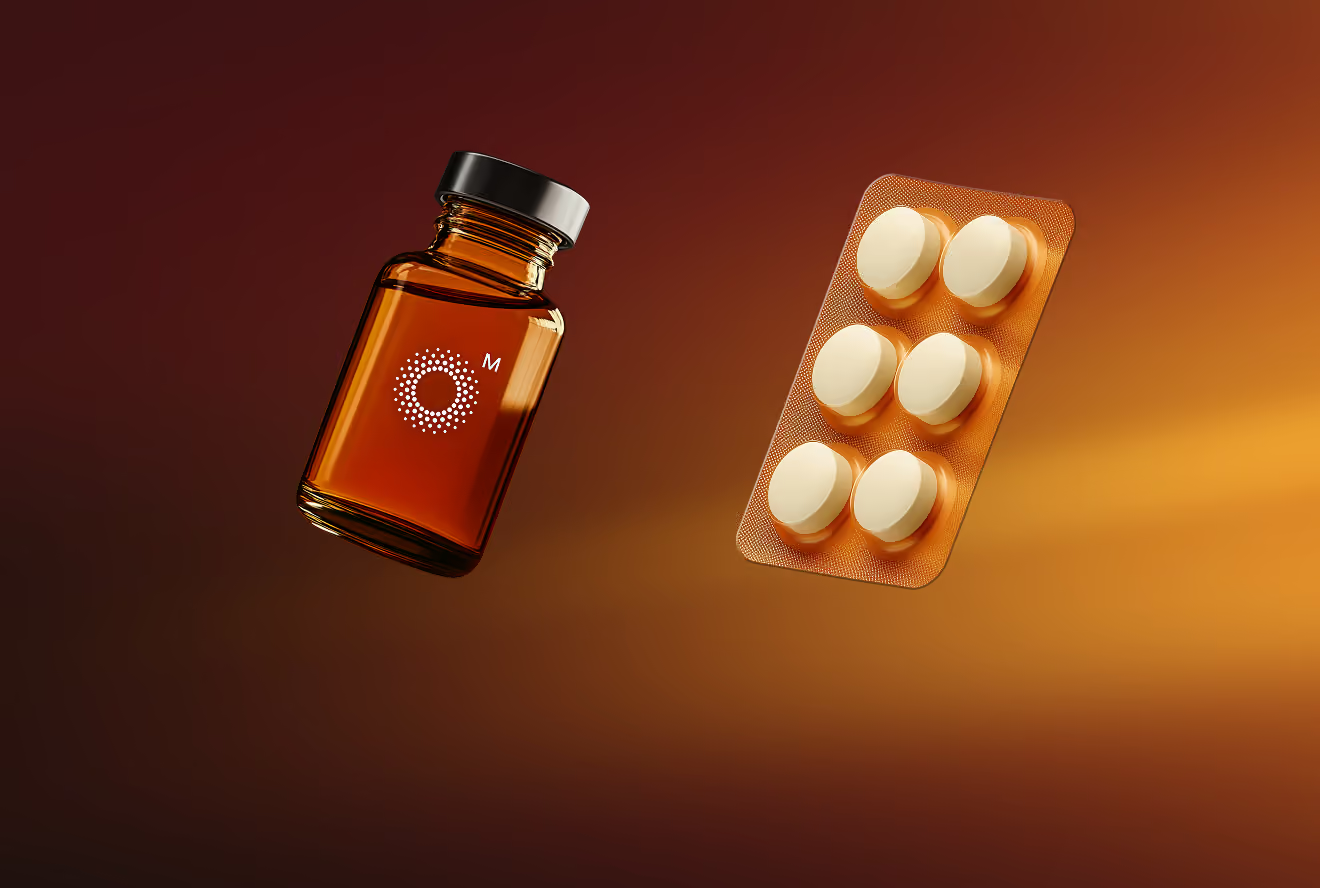
Mindbloom Tablets are small sublingual tablets held between the cheeks and gums for 7 minutes. The effects typically begin within 10 to 15 minutes. The needle-free option is an approachable entry point for individuals who are new to ketamine therapy.
Mindbloom Injectables are administered subcutaneously via a tiny insulin needle into the abdomen. The effects begin in approximately 5 minutes. The injectable method offers higher bioavailability and more consistent session intensity. In fact, 81% of clients who have tried both formats report that injectables are easier and preferable to use.11 Mindbloom is the only at-home ketamine provider offering subcutaneous administration.
Ketamine Therapy in New York City, Brooklyn, Buffalo, Rochester, Albany, and Across New York State
New York City. Mindbloom serves residents across all five boroughs via telehealth — no clinic visit required, no commute. A licensed provider evaluates you remotely, your medication ships to your home address, and sessions happen in your own space with a peer monitor present. For New York City residents, this matters practically: IV ketamine infusions in Manhattan typically can cost over $1,000 per session, require travel to a facility during business hours, and don't include the coaching and integration support that's built into Mindbloom's program. At-home ketamine therapy with Mindbloom starts at $215 per session for new clients.
Brooklyn. Brooklyn residents access Mindbloom's full program without traveling into Manhattan. Because the model is entirely telehealth-based, your borough, neighborhood, or proximity to a subway line is irrelevant — your provider appointment happens over video, and your Bloombox ships directly to your address. This is the same program, same providers, and same outcomes data as any other New York location.
Long Island. Residents in Nassau and Suffolk Counties have the same access to Mindbloom as someone living in Midtown. There are no geographic restrictions within New York State, and the absence of in-person ketamine clinics in many Long Island communities makes the at-home model a practical fit. Your provider is licensed in New York, your medication ships to your home, and your sessions happen on your schedule.
Buffalo and Western New York. Mindbloom serves Buffalo and the surrounding western New York region, including Niagara Falls, Cheektowaga, and the broader Erie County area. For residents in this part of the state, the at-home model removes the barrier of distance from the IV ketamine clinic market concentrated in New York City. Access to a licensed provider, a structured treatment program, and published outcomes data is the same regardless of where in New York you live.
Rochester. Rochester residents can access Mindbloom's at-home ketamine therapy program through the same telehealth process available statewide. All medical interactions are conducted remotely, medication ships to your home, and the program includes provider consults, guide coaching, and integration support. Residents in surrounding Monroe County communities have the same access.
Albany and the Capital Region. Mindbloom serves Albany and the broader Capital Region, including Schenectady, Troy, and surrounding communities, via telehealth. The program is identical to what's available in New York City — the same providers, the same treatment protocol, and the same peer-reviewed outcomes data. For Capital Region residents evaluating ketamine therapy options, the at-home model means no travel to a clinic and no geographic limitation on care.
Rural and Suburban New York. Mindbloom's telehealth platform covers all of New York State, including communities where in-person ketamine clinics are not available. If you live in a rural or suburban area and have been told ketamine therapy isn't accessible to you, that's not accurate for at-home programs. Eligibility is determined by your medical history, not your zip code.
Why Choose Mindbloom for Ketamine Therapy in New York
Mindbloom is the largest provider of guided at-home ketamine therapy in the U.S, having facilitated over 700,000 guided sessions to date. Mindbloom's approach is built on the principle that ketamine therapy requires a comprehensive therapeutic framework, not just medication.
- Peer-reviewed research: Mindbloom has published two of the largest real-world outcomes studies of at-home ketamine therapy in the Journal of Affective Disorders.1,3
- Subcutaneous option: Mindbloom is the only at-home provider offering subcutaneous ketamine administration for more consistent dosing.
- Comprehensive program: Every program includes provider consults, guide coaching, unlimited messaging, Group Integration Circles, and the Bloombox.
- Affordability: Mindbloom is approximately 60% more affordable per session than in-office IV ketamine infusions, and accepts HSA/FSA funds.
- Statewide New York access: The program is available to all New York residents via telehealth, including those in rural and suburban communities.
How to Choose a Ketamine Therapy Provider in New York
Evaluating a provider requires asking specific questions whether you are considering an in-office or at-home option. You need to assess their medical rigor, safety standards, and support structure. The best provider is the one whose model aligns with your specific medical and psychological needs.
- Provider credentials: Is the prescribing physician licensed in New York, and what is their experience with ketamine therapy?
- Screening process: Does the provider conduct a thorough medical and psychiatric evaluation, including a review of contraindications and drug interactions?
- Safety protocols: What monitoring is required during sessions, and is there a clear escalation pathway if you experience a side effect?
- Integration support: Does the provider offer preparation and integration coaching, or do they only provide medication?
- Published outcomes: Has the provider published peer-reviewed research on their specific protocol and patient outcomes?
- Transparency: Are the costs, session counts, and included features clearly communicated before you begin?
Watch for red flags during your evaluation. Red flags include a lack of medical screening before prescribing, no integration or follow-up support, and an unwillingness to discuss potential side effects or contraindications.
How to Start Ketamine Therapy at Home in New York
Beginning at-home ketamine therapy with Mindbloom is a medical process designed to ensure safety and alignment with your goals. The steps below mirror the program structure described earlier, beginning with a medical evaluation. In Mindbloom's published research, 89% of clients reported symptom improvement, with some noticing changes within hours or days of their first session, with more durable benefits developing over a series of treatments.
- Complete the online assessment: Visit mindbloom.com to fill out a brief survey covering your mental health history, symptoms, and goals.
- Meet with a licensed provider: You will attend a telehealth evaluation. If ketamine therapy is medically appropriate, your provider will create a personalized dosing and session plan.
- Receive your Bloombox: Your session essentials and prescribed medication will be shipped directly to your home in New York.
- Begin your first guided session: You will complete your session at home with your peer treatment monitor present, using the Mindbloom app for guidance.
- Engage in coaching and integration: Between sessions, you will utilize guide coaching, journaling, and Group Integration Circles to support lasting change.
Important Safety Information
Ketamine is not FDA-approved for PTSD, depression, or anxiety. Common side effects include dissociation, increased blood pressure, nausea, dizziness, and cognitive impairment. Ketamine has abuse potential and is not appropriate for patients with uncontrolled hypertension, psychotic disorders, or substance use disorders. Do not drive or operate machinery until the day after treatment. Individual results may vary. Full safety information: www.mindbloom.com/safety-information
Off-Label Use Disclosure
Ketamine is FDA-approved only as an anesthetic. Use for mental health conditions represents off-label prescribing by licensed clinicians based on clinical judgment. Schedule III Controlled Substance - DEA regulations apply.
Frequently asked questions
Is Mindbloom Available in New York?
Yes. Mindbloom serves residents throughout all of New York State, including New York City, Brooklyn, Long Island, Buffalo, Rochester, Albany, and rural and suburban communities, via its telehealth platform.
Can Ketamine Therapy Be Done at Home in New York?
Licensed providers can prescribe monitored at-home ketamine therapy in New York when they determine it is medically appropriate. Mindbloom provides guided at-home ketamine therapy programs to New York residents, with all medical interactions conducted via telehealth and medication shipped directly to your home.
How Quickly Does Ketamine Therapy Work and How Many Sessions Are Typical?
In Mindbloom's published studies, 89% of clients reported symptom improvement. Some people notice changes within hours or days of their first session, while more durable and cumulative benefits typically develop over a series of sessions. Mindbloom offers programs of 6, 12, or 18 sessions, personalized based on your medical needs and goals.
Is Ketamine Therapy Safe?
Ketamine has a well-established safety profile supported by decades of medical use and peer-reviewed research. In Mindbloom's published studies, side effects occurred in approximately 4 to 5% of sessions and serious adverse events in fewer than 0.1%, with safety maintained through medical screening, defined protocols, and ongoing monitoring.
Can I Use HSA or FSA Funds for Mindbloom in New York?
Yes. Mindbloom accepts HSA and FSA payments, which can help offset the out-of-pocket cost of your treatment program. You should verify specific eligibility requirements with your plan administrator.
Do I Need a Support Person for At-Home Ketamine Therapy?
Yes. Mindbloom requires a peer treatment monitor to be physically present in your home during every dosing session to ensure your safety and comfort. The monitor is a mandatory part of the safety protocol.
What Does Dissociation Feel Like During a Session?
Dissociation involves a temporary shift in sensory perception and a feeling of detachment from your ordinary thought patterns. Most people find the dissociative state therapeutically meaningful within a guided setting, as it allows them to view entrenched challenges from a new perspective.

Mindbloom Treatment
See what might be possible with clinician-guided, at-home ketamine therapy. New client programs start at $165 per session.
Authors